🗓️Published on: 22/10/2026
In February 2026, Algeria replied formally to a joint communication sent to it by eight United Nations mandate-holders under the Human Rights Council's Special Procedures, concerning the trade unionist Ali Mammeri and the poet Mohamed Tadjadit. In June 2026, the Committee on Freedom of Association of the International Labour Organization examined415Case No. 3434 , in which Mammeri's situation appears, in its 415th Report. Set side by side, the two accounts the authorities gave to these bodies show documented differences on the date of arrest, on how the arrest is characterized in procedural terms, on the outcome of the appeal against pre-trial detention, and on how much information actually reached each body.
In a thirty-page official reply dated February 2026 and registered under the symbol HRC/NONE/2026/SP/28 HRC/NONE/2026/SP/28, the Algerian Government set out its account of the cases of the trade unionist Ali Mammeri and the poet Mohamed Tadjadit. The reply answers the allegation letter AL DZA 7/2025 of 8 December 2025sent by UN experts. This article takes that reply, together with the observations Algeria submitted to the International Labour Organization, as its starting point for examining the questions that remain open.
A Special Procedures communication sets out allegations and concerns that call for a reply from the State, and it is not a court judgment. The Government, for its part, gives its own account and maintains that the proceedings were lawful. What remains to be tested is whether that account is consistent with the dates and details set out in the official correspondence, and the question becomes sharper when two international bodies are examining the same case.
Who Ali Mammeri is, and why his case reached eight UN mandates
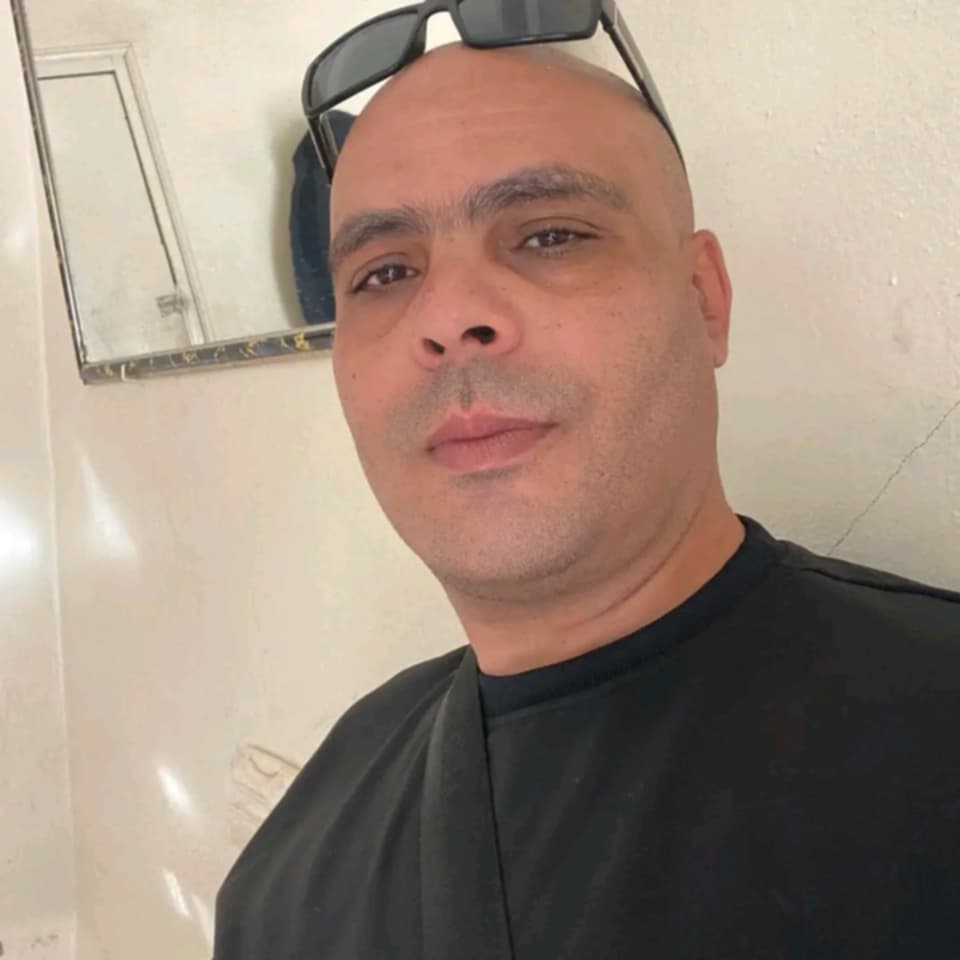
Ali Mammeri, born on 18 April 1985, is a civil servant in the culture sector in the wilaya of Oum El Bouaghi, president of the National Union of Civil Servants in the Field of Culture and Art (SNFC) and a member of COSYFOP's national council. The experts' letter, in its account of the background to the case, states that he took part in organizing workers in a sector that had no union presence, that he signed up more than six hundred members between June 2024 and March 2025, and that he was then elected president of the union's executive bureau.
Four days after the general assembly held on 15 March 2025, he was arrested outside his workplace. On 29 October 2025 the criminal court of first instance in Oum El Bouaghi sentenced him to fifteen years' imprisonment, a sentence later reduced on appeal to ten years on 1 February 2026. The Government ties the prosecution to charges of glorifying terrorist acts, of using electronic communications, and of passing on administrative information and documents, while the UN experts question whether the case is in fact connected to his exercise of fundamental rights, trade union activity among them.
Case timeline
- 26 February 2024 Joins COSYFOP.
- 17 June 2024 Appointed union delegate to the Ministry of Culture, and the unionization drive begins.
- 16 July 2024 Requests reinstatement in his original post, refused the following day.
- 11 February 2025 COSYFOP files a submission with the Committee on Freedom of Association containing allegations of reprisals against him.
- 15 March 2025 General assembly elects him president of the union's executive bureau.
- 19 and 20 March 2025 Arrest, and the start of police custody according to the Government's account.
- 27 March 2025 Brought before the public prosecutor and placed in pre-trial detention, with a torture complaint filed on the same day according to the experts.
- 14 September 2025 The International Labour Office receives the Government's first observations in the case.
- 29 October 2025 First-instance sentence of fifteen years' imprisonment.
- 8 December 2025 Joint allegation letter AL DZA 7/2025.
- 1 February 2026 Sentence reduced on appeal to ten years.
- February 2026 The Algerian Government's official reply to the experts.
- 12 April 2026 The International Labour Office receives the Government's second observations.
- 13 June 2026 The ILO Governing Body adopts the Report415.
What the Algerian Government told the United Nations
Pages 15 to 19 of the reply are given over to Mammeri's case, and the reply returns to it at page 20 and at pages 23 and 24, in the sections on enforced disappearance and on conditions of detention. The reply states that the security services received information that someone was relaying on social media the postings of "saboteurs" and of persons wanted by the courts, that the investigation linked a telephone number to Mammeri, that he had been in contact with several "saboteurs", and that he had disclosed administrative documents connected to his work. It adds that his phone and his two computers were searched under judicial warrant, and that both computers underwent technical examination.
In legal terms, the prosecution rests on articles 87 bis, 87 bis 1, 87 bis 4 and 87 bis 5 of the Penal Code, and on articles 34 and 39 of Ordinance No. 21-09 on the protection of administrative information and documents. The Government maintains that he was prosecuted neither for his ideas nor for his affiliations but for "specific material facts". At page 20 it explains that the extension of police custody until 27 March was authorized by the public prosecutor and carried out under his supervision, on the basis of provisions of the Code of Criminal Procedure that permit such an extension in terrorism investigations, and of articles 45 and 46 of the Constitution. It further states, at pages 23 and 24, that he receives regular medical and psychological care in prison as well as visits from his family and his lawyers, and that he is subject to no discriminatory or degrading treatment. On the trade union question the reply is categorical, stating that the measures taken have "no connection with lawful trade union activities".
This account contains details that can be checked, among them the dates of the medical examinations and the times of the calls and visits. The published text, however, gives no access to the medical certificates, to the arrest records or to the judgments themselves, which limits how far several of the contested points can be verified independently.
What Algeria submitted to the International Labour Organization
القضية رقم 3434 Case No. 3434, registered against Algeria before the Committee on Freedom of Association, was brought by the complainant organization known to the Committee as the Trade Union Confederation of Productive Workers (COSYFOP). It concerns in the first place the recognition and registration of the confederation and the situation of a number of its leaders, Mammeri among them. In its Report411 of June 2025, the Committee asked the Government to provide, as a matter of urgency, its observations on the situation of the union leaders named in the complainant organization's communications of 7 and 9 April 2025, namely Mammeri and Bousnane. The Committee had already recommended, at its earlier examination of the case in March 2024, that article 87 bis of the Penal Code should not be applied to the normal activities of workers' and employers' organizations, in particular to strike calls, protests and peaceful demands for a change of government.
In the 415th Report415, paragraph 49 records that the International Labour Office received the Government's observations on 14 September 2025 and again on 12 April 2026. Paragraph 58 sets out the substance of the first set. The union Mammeri heads "has no legal status and has never been registered with the Ministry of Labour", his transfer took place in March 2024 and therefore preceded his union appointment in June 2024, and he was suspended from his functions on 19 April 2025, the Government having stated that he "abandoned his post in March 2025". He "was arrested on 19 March 2025 as part of a preliminary inquiry", and the case remains under investigation.
Describing the case as still under investigation was consistent with the date of those first observations, which predate the October 2025 judgment. The Government filed a second set of observations on 12 April 2026, after the appeal judgment had been handed down, and paragraph 62 records that in them it confirmed the information already supplied in September 2025. Paragraph 72415 then shows that the Committee learned of the Oum El Bouaghi Court of Appeal ruling of 1 February 2026, upholding the conviction and cutting the sentence from fifteen years to ten, from publicly available information that the Government had not provided. This gap is not an inference drawn by COSYFOP, since it is the Committee on Freedom of Association itself that recorded it.
The Paragraphs 73 and 77 (c) of the same report record that, in the absence of the documents and publications giving rise to the criminal convictions, the Committee cannot fully assess whether the measures relate to freedom of association, which is why it asked to be sent copies of the court rulings handed down against Bousnane and Mammeri. The Committee has indeed received information from the Government, yet the documents that would allow the judicial basis of the prosecution to be verified remained unavailable to it during this examination.
A first discrepancy, 19 or 20 March
At page 15 of the reply, "on 19 March 2025 the person concerned was apprehended outside his workplace in possession of a mobile telephone fitted with a SIM card", followed on the same page by "on 20 March 2025, at 10.30 a.m., the person concerned was placed in police custody". At page 20 the document returns to the point and states that he was taken into custody "on 20 March 2025, the date of his arrest". Before the Committee on Freedom of Association, paragraph 58 records that "Mr Mammeri was arrested on 19 March 2025 as part of a preliminary inquiry".
The allegation letter states that the arrest took place on 19 March 2025 and that Mammeri was not told why he was being detained. The reply, for its part, dates the start of police custody to 20 March and then describes that same day as "the date of his arrest", while confirming that he was apprehended on 19 March. The published text does not explain the legal status of the interval between the two moments. Establishing the hour at which a person is actually deprived of liberty matters for assessing time limits and procedural safeguards, and settling it requires access to the arrest record and the custody register.
Flagrante delicto and preliminary inquiry, two characterizations that do not match
At page 20 of its reply to the experts, the Government justifies the absence of an arrest warrant on the ground that the offences were committed "in flagrante delicto", a situation in which the Code of Criminal Procedure allows an arrest without judicial warrant. The account it gave to the Committee on Freedom of Association places the arrest instead "in the course of a preliminary inquiry into the use of electronic accounts to support acts of terrorism".
Describing the operation as a preliminary inquiry does not automatically rule out a situation of flagrante delicto, since procedural stages can overlap depending on the facts. Invoking flagrante delicto to justify arresting someone without a judicial warrant does, however, require the authorities to set out the material facts that establish it, and noting that he was carrying a mobile phone is not on its own enough to support that characterization. The reply does not publish the arrest record that would allow the basis relied on by the authorities to be examined.
Contact with the family and the place of detention
The Government answers the allegation of enforced disappearance by stating that he "was at no point held in secret detention or in an unknown location" and that he was able to contact his family. Page 17 gives the detail, namely that he called his sister on 23 March 2025 at 9 p.m., that his mother and two brothers visited him on 25 March at 10 a.m., and that his lawyer visited him on 26 March at 10.30 a.m.
A telephone call followed by regular visits, and the absence of any constituent element of the crime of enforced disappearance.
The experts' letter states that neither his family nor his lawyer was given official information about where he was being held during the first days, between 19 and 23 March 2025. The reply records no contact earlier than 23 March, so the disagreement turns in particular on the conditions of that first period, on where he was held, and on whether his family and his lawyer were informed. The Government maintains that there was no secret detention, yet the published reply does not say precisely where he was from the moment of arrest until he was brought before the prosecutor. Settling this question requires the custody, notification and communication registers.
Two medical certificates against the duty to investigate
The Government relies on two medical certificates dated 20 and 27 March 2025 and treats them as proof that Mammeri was not subjected to torture. According to the reply, one of the examinations took place at the end of police custody on 27 March, while the first certificate bears the date of 20 March, which on the Government's own chronology is the start of that period. What each certificate actually proves depends on its content, on the circumstances of the examination, and on the period it covers.
According to the allegation letter, Mammeri told his lawyer on 26 March 2025 that he had been beaten during the first two days of detention, stripped and insulted, in order to make him sign confessions. The letter refers to a complaint lodged on 27 March 2025 in respect of those allegations. These are serious allegations that call for examination, and they are not established in law merely because they appear in a Special Procedures communication.
The reply does not address the outcome of that complaint and gives no information about any independent investigation into it, even though the experts asked specific questions on the point. Article 12 of the Convention against Torture obliges the authorities to carry out a prompt and impartial investigation wherever there are reasonable grounds to believe that torture has been committed, and article 13 guarantees the right to lodge a complaint and to have it examined promptly and impartially. A medical certificate cannot on its own take the place of the investigation that is due once the legal grounds for it are present.
A further question concerns the statements obtained during the investigation. According to the experts' letter, the defence asked for the exclusion of confessions that it said had been extracted under duress. Article 15 of the Convention against Torture provides that statements established to have been made as a result of torture shall not be invoked as evidence, save in the single situation the Convention sets out. The reply states that Mammeri acknowledged ownership of an online account, but it does not explain what became of the application to exclude, nor whether the contested statements were used in the judgment.
The appeal against pre-trial detention, between confirmation and inadmissibility
At page 16 of the reply, the indictments division issued on 15 April 2025 "a decision upholding" the order placing him in pre-trial detention. Before the Committee on Freedom of Association, paragraph 58 records that "his appeal was rejected on 15 April 2025". The two formulations are consistent with one another.
The experts' letter reports that on 17 April 2025 Mammeri was told his appeal against the detention order had been declared inadmissible as out of time, although, on the information it contains, it had been lodged on the very day the contested order was issued. There is a legal difference between a decision that examines an appeal and upholds the detention, and a decision that declares the appeal inadmissible without considering its merits. The difference between the two formulations is not in itself enough to establish a violation, since the indictments division's own decision would have to be read to see how it ruled on the appeal. Article 9 (4) of the International Covenant on Civil and Political Rights guarantees the right to have the lawfulness of detention tested before a court.
The Government also puts forward an express legal basis for the length of police custody, namely an extension granted by the public prosecutor under provisions specific to terrorist offences, which on its own account ran from 20 to 27 March 2025. Article 9 (3) of the Covenant nonetheless requires that anyone arrested be brought "promptly" before a judge or other officer authorized by law to exercise judicial power, and General Comment No. 35 of the Human Rights Committee explains at paragraph 12 that an arrest may be authorized by domestic law and still be arbitrary, and at paragraph 17 that detention which penalizes the legitimate exercise of guaranteed rights is arbitrary. Compliance with domestic law, which is the core of the Government's defence, does not dispense with an assessment of appropriateness, necessity and proportionality
The trade union dimension and the phrase "outside the established legal framework"
The Government maintains that the measures taken have nothing to do with freedom of association, yet it adds at page 19 that the facts "do not fall within protected trade union freedoms but relate to the creation of organizations or associations outside the established legal frameworks", and concludes from this that they are not covered by article 22 of the Covenant.
At this point the discussion shifts from the facts to their legal characterization. Article 2 of ILO Convention No. 87, which Algeria ratified on 19 October 1962, guarantees workers the right to establish organizations of their own choosing without previous authorization, the supervisory bodies accepting that a registration procedure is itself permissible so long as it remains a formality and is not discretionary. The registration of COSYFOP is therefore not a side issue in this case, since it is the subject of paragraph 77 (a), which urges the Government to enter without delay into discussions with the complainant organization's representatives on recognition and registration, to clarify the situation of its affiliated organizations, and to give it free access to a headquarters where it can hold trade union meetings.
The administrative dimension of the case emerges in paragraph 58 of the 415th Report415, where the Committee relays the Government's statement that Mammeri "abandoned his post" in March 2025, before he was suspended from his functions on 19 April of the same year. Given that he was arrested on 19 March and placed in pre-trial detention on 27 March, the question remains how an administrative absence was counted during a period of detention, and what steps the administration took to establish its cause. These elements are not on their own enough to conclude that the suspension was a reprisal for union activity, but they do call for an explanation in the light of a chronology that was known to the authorities.
In thirty pages, the reply submitted to the United Nations contains a single reference to the International Labour Organization, namely Algeria's ratification of Convention No. 87, and no mention at all of the Committee on Freedom of Association or of Case No. 3434. One explanation is that each mechanism has its own channel, since the Government corresponds with the Committee through the International Labour Office rather than through the Human Rights Council. The experts' letter, however, relied expressly on the Committee's work and on the 2025 observations of the Committee of Experts, so the point might reasonably have been addressed. Page 3 of the reply also lists seven mandate-holders where the letter carries eight signatures, the one missing from the list being the Special Rapporteur on the rights to freedom of peaceful assembly and of association, even though the reply does deal with the trade union allegations in a section of its own.
Does the chronology point to his trade union activity
The documented facts show that COSYFOP referred information about Mammeri's situation to the Committee on Freedom of Association on 11 February 2025, that the union's general assembly met on 15 March, and that he was arrested four days later. The allegation letter notes that the arrest followed a period of intense union activity. That sequence makes it necessary to examine whether the proceedings are connected to his work as a unionist, without establishing a causal link on its own.
The experts' letter contains further elements, reporting that the investigation records included exchanges between Mammeri and members of COSYFOP, among them the confederation's president, that the authorities read those exchanges as harming the national interest, and that they described the confederation itself as a subversive organization. The letter also mentions a video about workers' conditions which it says was never published. The Government speaks of contacts with people it calls "saboteurs", without the published version of its reply containing enough to assess the evidence attached to any individual exchange.
Even so, the published material does not allow it to be stated that the conviction rested on trade union activity as such, since the full judgments are not among the documents available here. That is precisely why the request made by the Committee on Freedom of Association at paragraph 73 , for the court rulings and for the content of the publications on which the prosecution was built, carries such weight. Those materials are essential to distinguishing legitimate union work from the conduct the authorities treat as criminal.
Mohamed Tadjadit, the second strand of the joint communication
The allegation letter also covered Mohamed Tadjadit, against the background of cases bearing on freedom of expression and the use of counter-terrorism legislation. In its reply the Government sets out several sets of proceedings concerning the poet and Hirak activist. It states that a first-instance court in Algiers convicted him on 11 November 2025 and sentenced him to five years' imprisonment, that the Criminal Chamber of the Algiers Court of Appeal convicted him on 14 January 2026 and sentenced him to three years of which one was suspended, and that both the defence and the prosecution lodged cassation appeals on 22 January 2026. The Government maintains that these proceedings were conducted under judicial supervision and respected the rights of the defence.
The experts' letter also raises the reclassification of the charges and the addition of criminal counts that could expose Tadjadit to a heavier penalty. Six UN experts returned to the point in a statement of 28 April 2026 , warning against the continuing prosecutions and the new charges, some of which carry the death penalty. Each stage of the proceedings stands on its own, and the earlier cases should not be conflated with the newer ones.
The Working Group on Arbitrary Detention issued Opinion No. 45/2022 on the detention of Tadjadit and four other people in earlier proceedings, and found that detention arbitrary under categories I, II, III and V. That finding concerns those facts and is not an automatic ruling on the later prosecutions. Nor should the joint allegation letter be confused with the separate procedure the Working Group may follow when it receives a fresh request for an opinion.
Why the reliability of information given to international mechanisms is a question of credibility
Not every difference between communications addressed to international institutions amounts to an established contradiction, since correspondence may cover different stages of a case or use different procedural descriptions. That does not dispose of the precise questions that remain about the date of arrest, the nature of the decision given on the detention appeal, the place of detention during the first days, the fate of the torture complaint, and the extent to which the Committee on Freedom of Association has received the court rulings.
The credibility of information supplied to international supervisory mechanisms is measured by how precise it is and how far it can be verified. When the Committee on Freedom of Association records that it learned of a decisive judicial development from public sources rather than from the Government's own correspondence, the Committee's ability to assess the case in good time is weakened, and a legitimate question arises about how fully the Government is cooperating with the supervisory bodies. This is a reading of what missing information does, and it is neither a sanction nor a formal finding by the United Nations or the International Labour Organization on Algeria's credibility.
Questions still awaiting an answer
Where was Mammeri held between 19 and 27 March 2025, and when were his family and his lawyer informed? What became of the torture complaint, and was an independent investigation opened into it? Was the application to exclude the statements whose lawfulness the defence contested ever ruled on? Did the indictments division consider the appeal against pre-trial detention on its merits, or did it declare the appeal inadmissible? On what basis was COSYFOP described as a subversive organization? And has the Committee on Freedom of Association received the copies of the court rulings it requested?
Answering these questions precisely requires access to the relevant records, registers and court decisions, and the provision of the clarifications the international mechanisms have asked for. COSYFOP underlines the importance of upholding the guarantees of the International Covenant on Civil and Political Rights and of theConvention against Tortureand of cooperating in good faith with the Committee on Freedom of Association in Case No. 3434. Transparency, and the production of the necessary documents, remain the route to assessing the facts, removing the ambiguity and protecting both trade union and judicial rights.
📬 Did you like this article? Subscribe to our newsletter to receive the latest news and important information directly to your inbox.