🗓️ Published on: 07/12/2025
A Decisive Move by the Congress Preparatory Committee: Belkacem Fellfoul Expelled from the Union, Ending an Unlawful “Fifth Term”
In a landmark organizational move that could reshape Algeria’s independent trade union landscape, the Preparatory Committee for SNAPAP’s Nationwide Unifying Congress has announced the opening of registration for its members ahead of the congress scheduled for 10–12 April 2026.
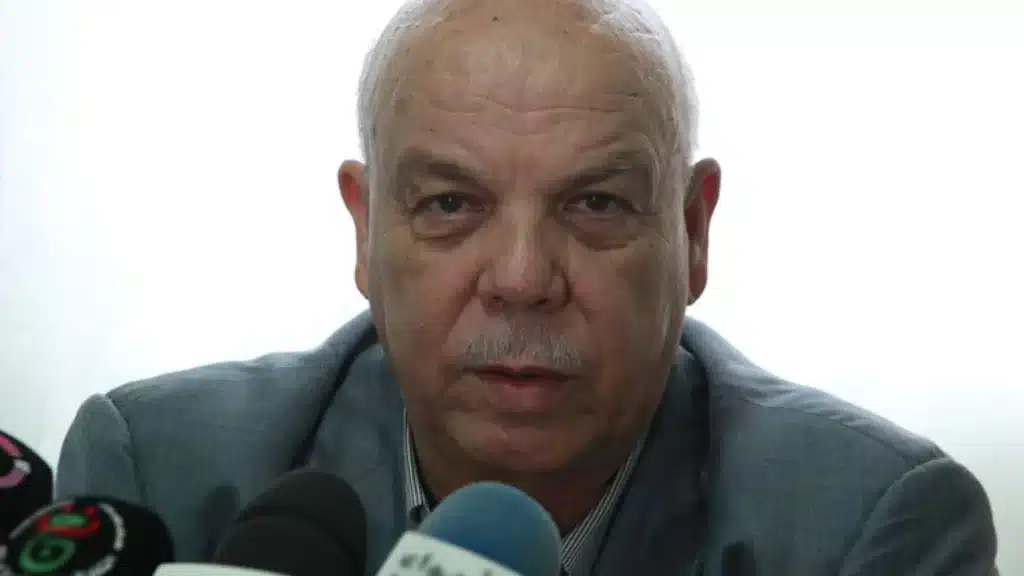
The announcement signals a firm commitment to rebuilding the union on democratic and transparent foundations. More importantly, it coincides with a decisive measure taken by the Preparatory Committee regarding the current leadership: the final dismissal of the sitting Secretary General, Belkacem Fellfoul, who has been serving a controversial fifth term.
The Fifth Term … The Legal Basis for Dismissing Belkacem Fellfoul from SNAPAP
According to the announcement and internal sources, the decision to dismiss Belkacem Fellfoul—who has led the union for more than two decades—was primarily driven by his insistence on remaining at the helm for a “fifth term.” This situation constitutes a clear violation of the new organizational statute as well as SNAPAP’s own internal regulations.
The Preparatory Committee’s decision is grounded in Article 56 of Law 23-02 on trade union rights, which clearly stipulates that a union official may not lead an organization for more than two consecutive terms.
On the basis of this clear legal provision, Belkacem Fellfoul’s continued hold on the position for a fifth term places him in a fully unlawful situation. This prompted the Preparatory Committee to move forward with his dismissal in order to ensure compliance with the law and restore legitimacy to the union.
Legal procedures and a specialized lawyer to follow up on the procedures
The Preparatory Committee affirmed that it is moving forward with steady steps to ensure the full legality of its upcoming congress, both nationally and internationally. In this context, the committee announced the appointment of a lawyer specialized in labor and administrative law to handle the procedures required to obtain the official administrative authorization for holding the congress on its scheduled dates. This measure reflects the committee’s determination to operate strictly within the framework of the new legislation and to reinforce the legitimacy of the forthcoming congress.
A Call to “Pass the Torch”
In a phone interview, Nassira Ghozlane, president of the Congress Preparatory Committee, confirmed that the congress is scheduled for 10–12 April 2026. She added that the likely venue is the El Safir Hotel in Algiers, although this may change depending on circumstances.
Ms. Ghozlane issued a strong call to SNAPAP members to register in large numbers for the upcoming congress, promising a genuinely democratic gathering in which the following will take place:
Passing the torch to the younger generation of trade unionists to ensure continuity
She also emphasized the Committee’s firm commitment to ensuring that the congress remains entirely independent from political maneuvering and completely free from any form of government interference—regardless of the consequences.

Online Registration Form for Congress Participation
The Congress Organizing Committee has launched a dedicated online form for preliminary registration. In a statement to COSYFOP’s website, the Committee confirmed that it will contact all registered participants as soon as possible, based on the information provided in the electronic form.
Click here to access the registration form
How COSYFOP Reads Article 56 of Law 23-02
Commenting on the significance of this step, Raouf Mellal, President of the Trade Union Confederation of Productive Forces (COSYFOP), offered his perspective on the implementation of the new law:
“What the SNAPAP Congress Preparatory Committee has done is a direct and faithful application of the spirit of Law 23-02 on trade union rights—specifically Article 56, which prohibits extending a union mandate beyond two terms.”
He noted, however, that he remains opposed to this provision, explaining that it was originally crafted as a tool to target independent unions and to provide the government with a legal pretext to challenge the legitimacy of unions that refuse to align themselves with the authorities. Still, he stressed the importance of using these same legal gaps—created by the government for its own advantage—to hold accountable those union figures who operate in its favor, such as Belkacem Fellfoul.
These developments show that independent unions have begun using the new law to curb state interference in their internal affairs—an evolution that could signal the beginning of a new era in trade union governance in Algeria.
Click here to access SNAPAP’s Unifying Congress page on Facebook
📬 Did you like this article? Subscribe to our newsletter to receive the latest news and important information directly to your inbox.
With the comprehensive conference