🗓️ Published on: 21/12/2025
In recent years, Algeria has witnessed a dangerous escalation in the use of terrorism-related charges to silence political opponents and independent trade unionists. This trend marks a clear departure from the principles of the rule of law and the basic guarantees of a fair trial. The case of Lyes Touati, a trade unionist and political activist from Béjaïa, stands as a striking example of this repressive trajectory. He has been placed in pre-trial detention under Article 87 bis of the Penal Code, accused of belonging to or promoting an organization officially designated as “terrorist.”
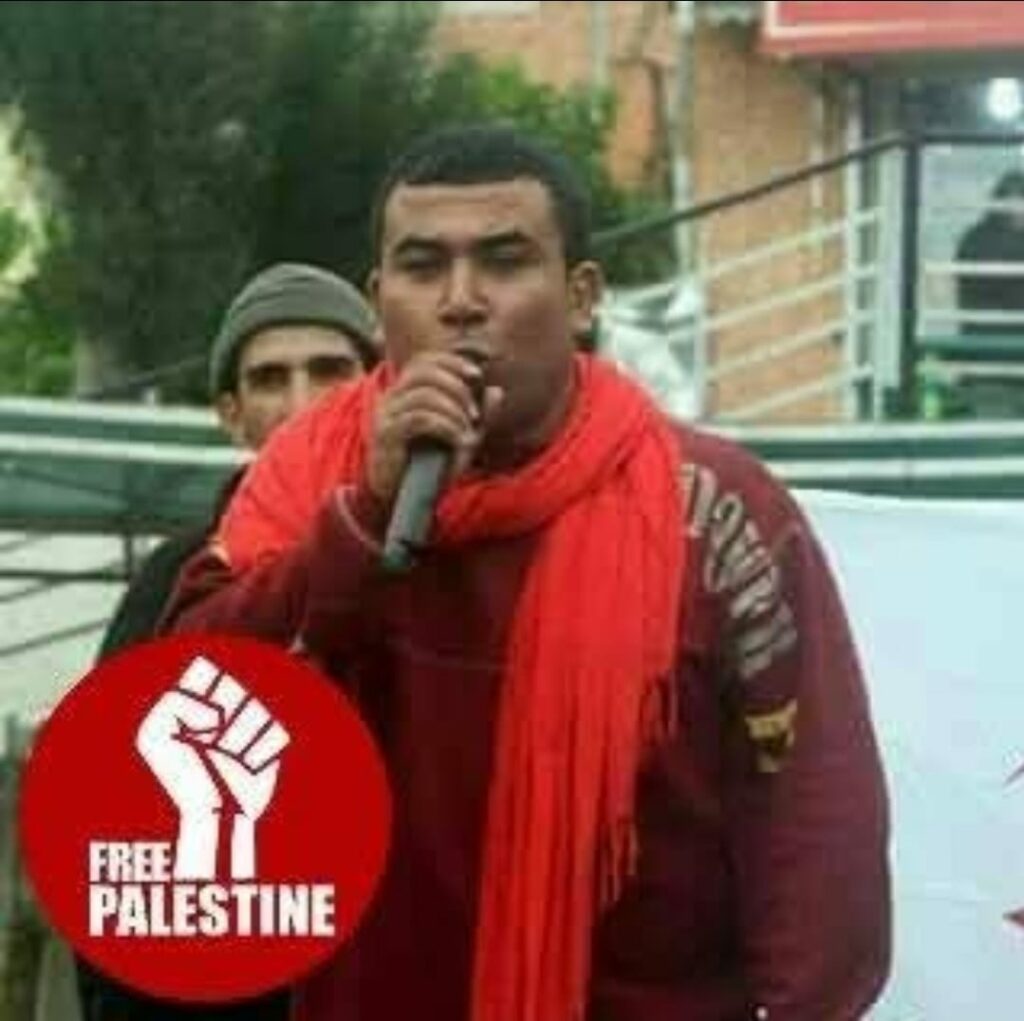
Who is Lyes Touati?
Lyes Touati is an independent trade unionist and an active member of SNAPAP, as well as a political leader within the Socialist Workers’ Party. He is widely known for his left-wing convictions, his consistent solidarity with social justice causes, and his commitment to defending economic and social rights, civil liberties, and democratic freedoms.
He has been unequivocal in his rejection of all forms of territorial division and is recognized for his strong opposition to the current political system. Like many young Algerians, he openly calls for genuine democratic change aimed at ending authoritarianism and systemic corruption.

The MAK Designation and the Logic of Accusation
The Movement for the Self-Determination of Kabylia (MAK), led by Ferhat Mehenni, was designated by Algerian authorities in 2021 as a terrorist organization. Since then, any alleged association with the movement — including praise, endorsement, or even online expression — has become grounds for criminal prosecution under vaguely worded legal provisions that fall short of internationally recognized standards of legal certainty.
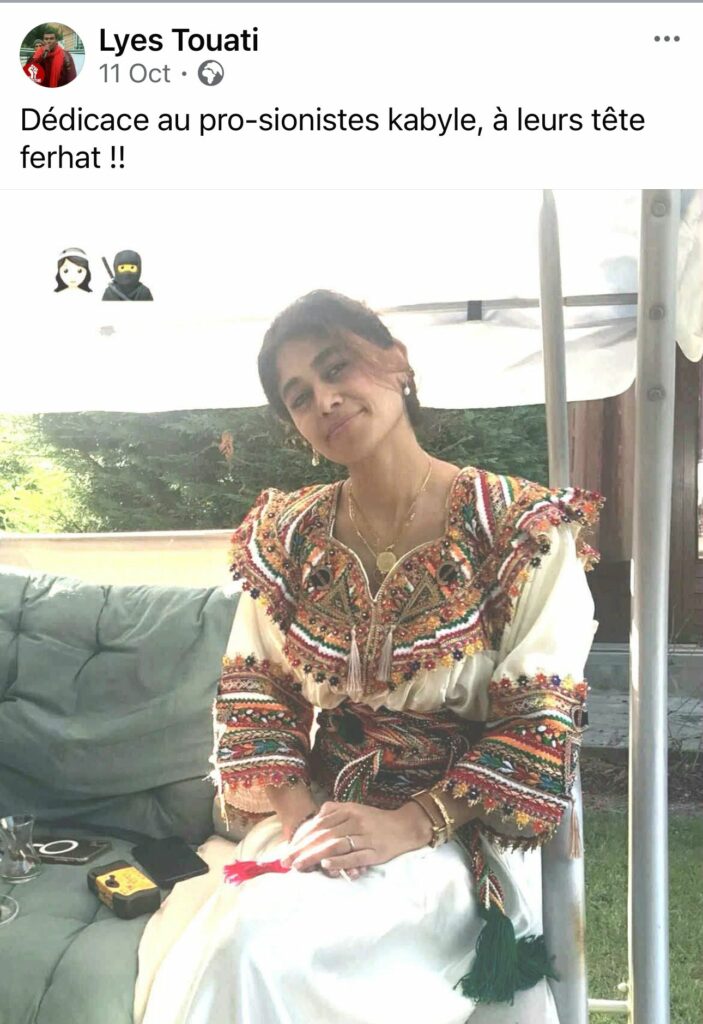
What makes the case of Lyes Touati particularly alarming is the stark contradiction between the charges brought against him and the publicly available facts. His Facebook posts and published writings clearly document his strong criticism of the MAK and its leadership, as well as his explicit rejection of its separatist agenda. Despite this documented record, judicial authorities in Béjaïa have charged him with “glorification of terrorism,” disregarding clear and verifiable digital evidence that directly contradicts the allegations.
Vague Laws, Instrumentalized Justice
This case cannot be examined in isolation. It forms part of a broader pattern in which Article 87 bis is systematically used as a political weapon. In its current formulation, the article allows an excessively broad interpretation of “terrorism,” enabling the prosecution of peaceful activists, trade unionists, journalists, and political opponents — rather than focusing on genuine acts of violence.
In this context, Raouf Mellal, President of the Trade Union Confederation of Productive Forces (COSYFOP), stated:
“The case of Lyes Touati leaves no doubt that the authorities are using vague and fabricated charges to imprison their opponents, tragically by instrumentalizing a judiciary that has become hostage to political and security interests. The credibility of justice — and of the state itself, both domestically and internationally — is no longer a concern for those in power.”
This statement reflects not merely a political position, but a reality repeatedly documented in reports by international human rights organizations, UN bodies, and global trade union federations, all pointing to the erosion of judicial independence in Algeria.
Targeting Trade Unionism Under the Pretext of Counter-Terrorism
The case of Lyes Touati is not an isolated incident. It forms part of a systematic attack on independent trade unionism, particularly against activists who refuse to submit to state-controlled unions or imposed political arrangements. Ali Mammeri, head of the Trade Union of Cultural and Arts Workers, offers another telling example of how counter-terrorism legislation is being misused to criminalize trade union activity and silence critical political positions.
Charging trade unionists with terrorism on the basis of their peaceful activities constitutes a flagrant violation of International Labour Organization conventions, particularly Conventions No. 87 and No. 98. It also represents a serious breach of freedom of expression and freedom of association, and sets a dangerous precedent that empties counter-terrorism of its genuine meaning, turning it into an instrument of political repression.
An Urgent Call for International Action — Including Democratic Governments Democracy
In light of this alarming drift, international silence is no longer acceptable. The continued criminalization of trade union activity and political opposition under the banner of counter-terrorism not only undermines fundamental rights, but also weakens genuine global efforts to combat terrorism. By alienating societies and eroding public trust, such practices destroy the very social legitimacy that effective counter-terrorism policies require to ensure global peace and security.
For this reason, COSYFOP stresses that responsibility does not lie solely with international human rights and trade union organizations. Governments themselves — particularly democratic governments — must act urgently, through:
- activating UN human rights mechanisms;
- holding Algerian authorities accountable within the framework of the International Labour Organization;
- strengthening international solidarity from trade unions and civil society organizations;
- exerting sustained pressure for the immediate release of Lyes Touati, Ali Mammeri, and all individuals detained solely for their trade union activities or political opinions.
Defending Lyes Touati, Ali Mammeri, and other imprisoned trade unionists — whether affiliated with the General Union of Algerian Workers or independent unions — is a defense of the very essence of trade union rights, the minimum standards of the rule of law, and the credibility of justice itself.
Turning the judiciary into a tool for silencing dissent can only deepen Algeria’s crisis, both domestically and internationally, and further erode what remains of public trust in state institutions.
A video posted by Raouf Mellal on his YouTube channel addressing this issue.
📬 Did you like this article? Subscribe to our newsletter to receive the latest news and important information directly to your inbox.