🗓️ Published on: 10/05/2026
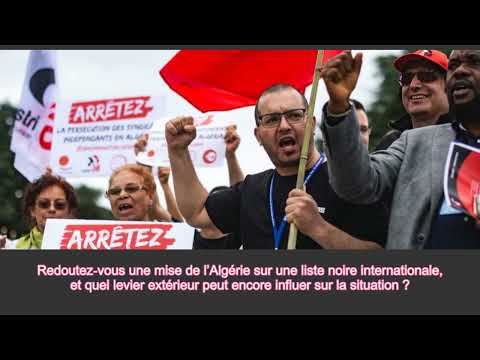
In an interview with Radio des sans voix, Raouf Mellal, President of the Trade Union Confederation of Productive Forces (COSYFOP), addressed three issues which, in his view, represent some of the most serious challenges facing trade union activity in Algeria today: the myth of trade union pluralism in Algeria and its impact on independent union work; the international steps taken by COSYFOP regarding Article 87 bis of the Penal Code and its effects on trade union freedoms; and the complex relationship between Algerian independent unions and the International Trade Union Confederation.
Trade Union Pluralism in Algeria: A Formal Pluralism Used to Fragment Workers and Weaken Independent Unions
Raouf Mellal stated that the official discourse on“trade union pluralism”in Algeria does not reflect the reality on the ground. Genuine pluralism, he stressed, is not measured by the number of unions that exist on paper — a figure the authorities estimate at more than 130 registered organisations — but by the ability of workers to build strong, independent organisations capable of operating freely across all sectors.
He explained that the Algerian authorities allow limited trade union pluralism in certain non-strategic sectors, such as education and health, while in practice closing the door to any genuine pluralism in sensitive and strategic sectors such as postal services, hydrocarbons, and social security. According to Mellal, this shows that the existing pluralism is not based on freedom of association, but is instead a selective form of pluralism governed by precise political and security calculations.
He also pointed out that Algeria does not, in practice, have real pluralism among national trade union centres. The General Union of Algerian Workers continues to dominate the national trade union space, while the Trade Union Confederation of Productive Forces, despite being a legally recognised national trade union centre, continues to face obstruction of its activities and ongoing pressure against its activists and members. This, he argued, exposes the limits of the official discourse on respect for pluralism.
For Mellal, one of the most dangerous developments in recent years has been the transformation of trade union pluralism into a tool for fragmenting workers and weakening independent unions, rather than strengthening them. He referred in this regard to what happened in the education sector, where the CNAPEST union, between 2003 and 2007, was able to secure important social and professional gains for workers thanks to its organisational strength and the unity of its membership. That strength was later gradually weakened after the authorities allowed the emergence of dozens of competing unions within the same sector.
According to the President of COSYFOP, facilitating the registration and recognition of more than thirty unions in the education sector was not a natural development reflecting the vitality of trade union activity. Rather, in many cases, it took place within a context shaped by political and security considerations aimed at creating fragmentation and internal competition, thereby weakening the ability of independent unions to negotiate, exert pressure, and achieve gains for workers.
He added that, after the experience led by CNAPEST in the early 2000s, the authorities understood that the real threat did not lie merely in the existence of an independent union, but in the existence of a strong, united and independent union capable of creating a balance of power within its sector. This is why “pluralism” was turned into a means of producing dozens of small and competing organisations that weaken one another and deprive workers of the ability to build genuine collective trade union strength.
Article 87 bis: From Anti-Terrorism Legislation to a Tool Threatening Trade Union and Human Rights Work
Speaking about Article 87 bis of the Penal Code, Raouf Mellal stated that the Trade Union Confederation of Productive Forces considers this provision to be one of the most serious threats to trade union and human rights freedoms in Algeria, due to its vague wording and the possibility of using it against peaceful and legitimate activities.
He explained that, in recent years, COSYFOP has submitted several complaints and communications to the International Labour Organization concerning this article, based on concerns that anti-terrorism legislation could be used against trade union work and human rights activism. He added that these efforts, after years of follow-up and pressure, contributed to prompting the ILO Committee of Experts to issue a direct request to the Algerian government concerning Article 87 bis.
Mellal considers this development to be of major political and legal significance. The Committee of Experts, he explained, does not request clarification on a specific legal provision unless there are serious indications of a problem regarding its application or its potential impact on the rights and freedoms protected under international labour conventions.
He noted that, for COSYFOP, the real danger does not lie only in the legal text itself, but also in the way it is used within a political and security environment increasingly marked by the securitisation of civic and trade union activity. According to COSYFOP’s monitoring, Article 87 bis has been applied in recent years against several human rights defenders, trade unionists, and advocates of public freedoms, leading some of them to be imprisoned for long periods under the cover of counter-terrorism.
Mellal stressed that this development is extremely dangerous because it shifts trade union work from the sphere of “social dispute” into the sphere of security suspicion. It also creates a permanent climate of fear within independent unions and civil society. When a trade unionist or human rights defender can be prosecuted under terrorism-related legislation because of peaceful activity, the issue is not only a legal violation; it reflects a political transformation affecting the very nature of the relationship between the state and society.
He added that COSYFOP does not view this file as a merely technical or legal matter. Rather, it sees it as a central battle to defend civic and trade union space in Algeria, because the expanded use of security legislation against peaceful activity threatens the future of public freedoms as a whole, not only trade union work.
Independent Unions and the International Trade Union Confederation: From Political Support to a Phase of Ambiguity and Retreat
أما بخصوص العلاقة مع الاتحاد الدولي للنقابات، فقد وصفها رئيس الكنفدرالية رؤوف ملال بالعلاقة المعقدة والمتغيرة، موضحًا أن هذا الاتحاد كان قبل سنة 2019 أكثر دعمًا للنقابات المستقلة الجزائرية، غير أن هذا الموقف عرف تحولًا واضحًا بعد Abdelmadjid Sidi Saïd, the former Secretary General of the General Union of Algerian Workers.
Mellal believes that part of the support enjoyed by Algerian independent unions during that period was not based solely on a principled commitment to defending trade union freedom. It was also influenced by internal conflicts and balances of power within the international trade union movement itself. He noted that Sidi Saïd was, at the time, in conflict with certain centres of influence within the ITUC, particularly in light of what Mellal described as his ambition to promote a trade union figure from the African continent to the leadership of that international body.
He added that many Algerian independent unions did not fully understand the nature of these balances. They believed that the international support they were receiving was entirely grounded in the principles of trade union freedom and international labour solidarity. However, the developments that followed the fall of Sidi Saïd, and later his imprisonment, revealed — according to Mellal — that the matter was far more complex, and that part of the international positioning was also linked to the reconfiguration of power relations within the international trade union movement.
وأشار رئيس الكنفدرالية رؤوف ملال إلى أن ما يؤكد هذا التحول هو الوضع الحالي للنقابات المستقلة الجزائرية داخل الاتحاد الدولي للنقابات، حيث أصبحت النقابة المستقلة العامة للعمال في الجزائر وهي النقابة المستقلة الوحيدة المنخرطة داخله شبه مجمدة، في وقت تراجع فيه مستوى الدعم السياسي والاهتمام الدولي بالملف النقابي الجزائري مقارنة بما كان عليه قبل سنة 2019.
وختم رؤوف ملال بالتأكيد على أن هذه التجربة أظهرت للنقابات المستقلة الجزائرية ضرورة بناء استقلاليتها السياسية والتنظيمية وعدم رهن مصيرها بالكامل بالدعم الخارجي أو بالتوازنات الدولية، لأن الدفاع الحقيقي عن الحريات النقابية يبدأ أولًا من قدرة النقابات نفسها على بناء قوة تنظيمية مستقلة، وعلى توثيق الانتهاكات وطرحها بشكل مباشر أمام الرأي العام الوطني والدولي.
Algeria set to face UN review over trade union rights
Source: Radio des sans voix · Published
Analysis
The president of COSYFOP describes his organisation’s relationship with the International Trade Union Confederation (ITUC) as complex and shifting. Before 2019 the ITUC was more supportive of Algeria’s independent unions, but its backing weakened markedly after Abdelmadjid Sidi Saïd was ousted as general secretary of the Algerian General Workers’ Union (UGTA).
According to Mellal, some of this international support was driven by more than a principled commitment to freedom of association, because it was also shaped by power struggles within the ITUC, notably Sidi Saïd’s ambition to place an African at the head of the organisation.
At the time, many of Algeria’s independent unions believed that the support they received rested entirely on the principle of trade union solidarity. Sidi Saïd’s fall and subsequent imprisonment revealed that the reality was far more complex and that some international positions were bound up with power realignments within the global trade union movement.
Today the only independent Algerian union affiliated to the ITUC is effectively frozen, and international interest in the trade union situation in Algeria has fallen sharply from its pre-2019 level.
Conclusion
For Algeria’s independent unions, the lesson of this experience is that they must establish their own political and organisational autonomy instead of relying entirely on outside support or on the international balance of power. Any genuine defence of trade union freedoms begins with the unions’ ability to build organisational strength of their own, to document violations and to take them directly to the public, both at home and abroad.
📬 Did you like this article? Subscribe to our newsletter to receive the latest news and important information directly to your inbox.